
Meiji Jingu|明治神宮
⛩️ One of Japan's Most Popular Shrines
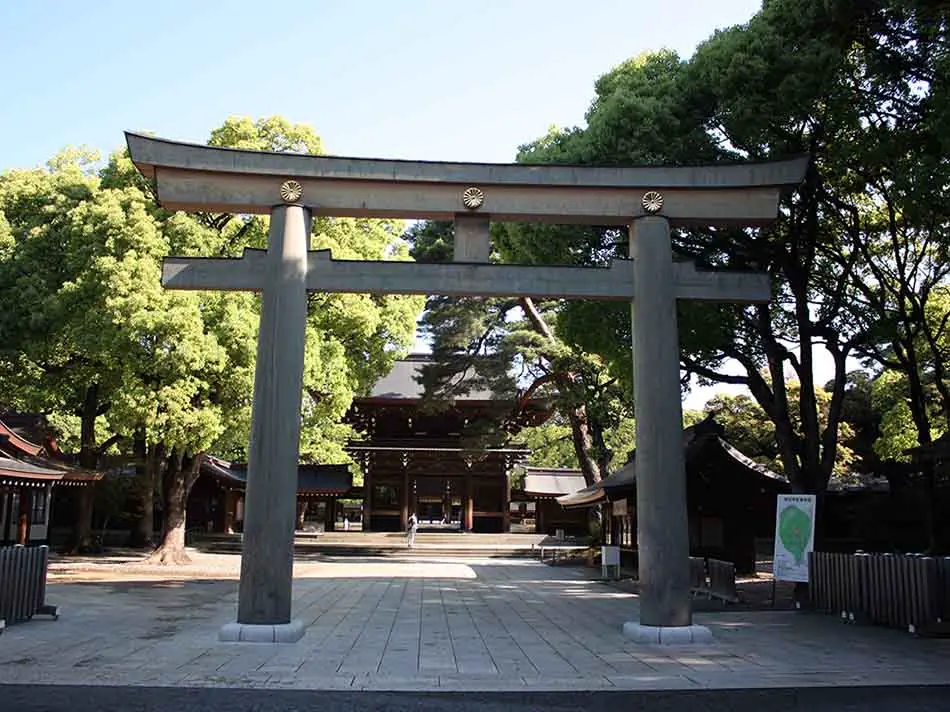
Meiji Jingu (明治神宮) is a major Shinto shrine located in Tokyo’s Shibuya Ward, next to Harajuku Station. Dedicated to Emperor Meiji and Empress Shoken, it’s famous for its grand torii and vast forest oasis of around 120,000 trees, offering a notable link to Japan’s history and religious traditions.
Overview
💴 Admission: Free
🕘 Hours: Daily, 7:00 ~ 16:00*
⏳ Time Needed: 1 - 2.5 Hours
📅 Museum is Closed: On Thursdays
📍 Location: Shibuya Ward, Tokyo
🚉 Best Access: From Shibuya or Shinjuku
2 Min from Harajuku Station (JR Yamanote Line)
2 Min from Meiji-jingumae Harajuku Station (Chiyoda / Fukutoshin)
About
Worth Visiting? Meiji Jingu is worth visiting for its sense of calm and connection with nature in the heart of Tokyo. The long forested approach, towering trees, traditional shrine architecture, and frequent wedding processions create a distinctly atmospheric experience. It’s especially appealing to first-time visitors interested in Shinto, Japanese culture, or peaceful walks.
When to Skip: f you’re short on time or less interested in shrines and forested walks, consider Sensoji for historic Tokyo, Gotokuji for a unique temple experience, or Shibuya Sky for panoramic city views.
History: Meiji Jingu was built in 1920 to enshrine Emperor Meiji and Empress Shoken after their deaths and remains a major symbol of Japan’s modern imperial history. The surrounding greenery was deliberately planted using trees donated from across Japan, designed to mature into a natural forest.
Things to Do
Interests:
Shrine Hopping
Nature Walks
History & Culture
Zen Moments
Autumn Leaves
Map
Things to See
Main Shrine (Honden): Follow the forest paths toward Meiji Jingu’s central shrine buildings, where Emperor Meiji and Empress Shoken are enshrined. The traditional wooden architecture is impressive, but the walk through the surrounding forest is just as much a part of the experience.
The Great Torii (Ōtorii): You’ll pass beneath this enormous wooden torii on the main approach. At 12 meters high and 17.1 meters wide, it’s one of Meiji Jingu’s most recognizable landmarks and is described by the shrine as Japan’s largest wooden Myojin-style torii.
Meiji Jingu Forest (Eien no Mori): Take your time walking through the shrine’s 70-hectare forest. It was deliberately planted to develop into a self-sustaining green oasis, and today its dense greenery makes the surrounding city feel surprisingly distant.
Sake & Wine Barrels (Kazaridaru): Look for the colorful rows of donated sake and wine barrels along the southern approach. The combination reflects the Meiji period’s blending of Japanese traditions with Western influences.
Couple Camphor Trees (Meoto Kusu): Beside the main shrine stand two sacred camphor trees joined by a shimenawa rope. They’re associated with marital harmony and are a popular spot for visitors hoping for good relationships.
Things to Do
Visit the Inner Garden (Meiji Jingu Gyoen): If you want to see a quieter and more landscaped side of the grounds, pay a visit to the Inner Garden. Its seasonal flowers, ponds, and walking paths feel quite different from the main shrine approach, with irises being a particular highlight in early summer. Hidden within the Inner Garden you will also find Kyomasa’s Well, a popular, spring-fed power spot with crystal clear blue water.
Visit the Meiji Jingu Museum (Closed on Thu): For a deeper look at the shrine and the imperial couple it commemorates, the museum displays historic objects connected with Emperor Meiji and Empress Shoken, including personal belongings and ceremonial items. It’s a good addition if you’re interested in the history behind the shrine rather than just the architecture.
See a Traditional Wedding: If you visit at the right time, you may see a traditional Shinto wedding procession taking place around the shrine. Sunday mornings are particularly associated with wedding ceremonies, although ceremonies are not guaranteed.
Plan Your Visit
Hours, ticket requirements, and special closures can change without notice, so be sure to check the latest details, seasonal schedules, and updates on the attraction’s official website before you go.
Hours: Opening Hours & Best Time to Visit
🕘 Hours
- Open: Daily, 7:00 ~ 16:00*
- Time Needed: 1 - 2.5 Hours
- Best Time: Early Mornings or Weekends
Opening Hours
- Temple Grounds (5:00/7:00 ~ 16:00/18:30): Open every day of the year, with opening and closing times varying throughout the year based on sunrise and sunset. For the detailed opening hours check the table down below.
- Meiji Jingu Inner Garden (9:00 ~ 16:00): Open daily from 9:00 and closing at 16:30 from March to October or 16:00 from November to February, with last entry 30 minutes prior to closing. During peak iris season the inner garden is open from 8:00 – 17:00 on weekdays, and extended until 18:00 on Saturdays and Sundays.
- Meiji Jingu Museum (10:00 – 16:30, Closed on Thu): Open Friday – Wednesday from 10:00 to 16:30 with last admission at 16:00. Closed on Thursdays (or the following day if Thursday is a national holiday) and during exhibition changeovers.
- Meiji Jingu Treasure Museum (Irregular Openings): The historic building opens only twice a year during Meiji Jingu’s primary traditional festival periods. Visitors can gain rare access from 10:00 to 16:00 during the Spring Grand Festival (late April to early May, overlapping Golden Week) and the Autumn Grand Festival (late October to early November).
| Month | Opening Hours |
|---|---|
| January | 6:40 – 16:20 |
| February | 6:20 – 16:50 |
| March | 5:40 – 17:20 |
| April | 5:10 – 17:50 |
| May | 5:00 – 18:10 |
| June | 5:00 – 18:30 |
| July | 5:00 – 18:20 |
| August | 5:00 – 18:00 |
| September | 5:20 – 17:20 |
| October | 5:40 – 16:40 |
| November | 6:10 – 16:10 |
| December | 6:40 – 16:00 |
Best Time to Visit
For a Quieter Atmosphere (Early Mornings): Arrive soon after opening to experience the forest and shrine grounds before the day becomes busier. The early hours also give you more time to enjoy the long approach in a peaceful setting.
For a Traditional Wedding (Saturday or Sunday Morning): Weekend mornings can offer a chance to see traditional wedding processions, although ceremonies depend on the day’s schedule and are not guaranteed.
Best Time of Year
Mid- to Late June (Summer): Head to the Inner Garden to see the stunning iris bloom. With around 150 varieties and 1,500 iris plants painting the grounds in vibrant purples and whites, it is one of the shrine’s most picturesque seasonal highlights.
Late November to Early Dec (Autumn): Vibrant Japanese maples turn the Inner Garden and surrounding forest pathways into a canvas of rich reds and golds, making it a peaceful and scenic time for a stroll.
Late March to Early April (Spring): Time your visit with the Spring Grand Festival to experience traditional music, dance, and cultural performances set against the fresh spring greenery.
January 1–3 (New Year): Experience Hatsumode, Japan’s traditional first shrine visit of the year. Keep in mind that this period draws massive crowds of over three million visitors, offering an electric, high-energy cultural atmosphere rather than a quiet escape.
Admission: Entrance Fees & Ticket Prices
💴 Admission & Tickets
- Admission: Free
- Typical Budget: ¥500 - ¥2,500
- Budget Tier: ¥0 - ¥¥ (Budget-Friendly)
Entrance Fees
- Grounds: Free
- Museum: ¥1,000
- Inner Garden: ¥500
- Treasure Museum: ¥0 – ¥1,000
Ticket Reservation
No tickets or reservations are needed to visit Meiji Jingu and the shrine forest itself. The Inner Garden and the Meiji Jingu Museum do require a ticket, but advance reservations or bookings are usually not needed.
Cost & Budget Breakdown
| Expense | Estimated Costs | Notes |
|---|---|---|
| REQUIRED COSTS | ||
| 🎟️ Entrance Fee | ¥0 | Free entry to the whole temple grounds |
| 🚉 Transportation | ¥280 – ¥320 | Round-trip fare from Shibuya or Shinjuku |
| OPTIONAL COSTS | ||
| ⛩️ Attractions | ¥500 – ¥1,500 | Visiting the Inner Garden and/or the Museum |
| ⛩️ Experiences | ¥100 – ¥3,000 | Omikuji, Omamori, Goshuin, Ema Plaque, etc. |
| 🛍️ Souvenirs & Gifts | ¥300 – ¥5,000 | The shop has a great selection of souvenirs and Japanese products |
| 🥮 Snacks & Drinks | ¥500 – ¥3,000 | Nearby Cafe, Restaurants |
| Total Budget Range | ¥280 ~ ¥15,000 | Basic to Deluxe Visit |
Yen Exchange Rate Calculator
Access: How to Get There & Around
🚉 Access
- Nearest: Harajuku Station (2 Min)
- Service Frequency: Every 3 - 5 Minutes
- Alternative: Meiji-Jingumae, Yoyogi Station
Getting There
Address: 1-1 Yoyogi Kamizono-cho, Shibuya-ku, Tokyo-to 151-8557 Japanese Address: 〒151-8557東京都渋谷区代々木神園町1-1
| From | Total Time | Walk | One-Way Fare |
|---|---|---|---|
| Asakusa | 40 – 50 min | 4 – 10 min | ¥260 – ¥480 |
| ⭐️ Shibuya | 5 min | 2 min | ¥160 |
| Shinagawa | 18 min | 2 min | ¥210 |
| ⭐️ Shinjuku | 10 min | 7 min | ¥160 |
| Tokyo Station | 20 – 40 min | 2 – 10 min | ¥210 – ¥260 |
Recommended Routes
From Harajuku (Walkable Distance): Harajuku Station is right next to the shrine’s outer entrance. From the giant wooden torii gate, it’s a peaceful 10-minute (approx. 800 m) walk straight through the shaded forest path to the main shrine buildings.
From Shibuya Station via Harajuku Station (Main South Entrance): Take the JR Yamanote Line from Shibuya Station to Harajuku Station (a 3-minute ride). From the station, it’s a 1-minute walk right to the shrine’s main approach.
From Shinjuku Station via Yoyogi or Harajuku Station (North or South Entrance): Take the JR Yamanote Line to Yoyogi Station. From there, it’s a 5-minute (approx. 400 m) walk to the shrine’s lesser-known North Entrance, leading you through a quieter, scenic approach to the main grounds.
Getting Around
Meiji Jingu‘s grounds are extensive, and each main entrance is about a 10-min walk from the central shrine buildings. Allow extra time to explore the forest paths, torii gates, shrine buildings, and other sights along the way.
Nearby
Areas:
Harajuku
Shibuya
Shinjuku
Sights & Attractions
🌳 Yoyogi Park (190 m, 2 Min): Continue into one of Tokyo’s largest central parks for open lawns, walking paths, sports facilities, and a very different atmosphere from Meiji Jingu’s carefully preserved forest.
🛍️ Takeshita Street (200 m, 5 Min): Head toward Harajuku’s famous pedestrian shopping street for youth fashion, quirky stores, Japanese street food, and the energetic side of the neighborhood.
🛍️ Omotesando (200 m, 5 Min): Walk from the Harajuku side toward Omotesando for upscale shopping, cafés, architecture, and the tree-lined boulevard that contrasts sharply with the shrine grounds.
🌳 Shinjuku Gyoen (1.5 km, 15 – 20 Min): Combine Meiji Jingu with this expansive garden for another style of Tokyo greenery, particularly attractive during seasonal foliage and blossom periods.
🌃 Shibuya (1.3 km, 7 – 20 Min): Continue south toward one of Tokyo’s most famous urban districts for Shibuya Crossing, shopping, restaurants, and nightlife.
Sources
- Official Website: www.meijijingu.or.jp/en/
- Wikipedia: www.wikipedia.org/wiki/Meiji_Shrine
- Good Luck Trip: www.gltjp.com/en/article/item/10443/
- Japan National Tourism Organization: www.japan.travel/en/spot/1666/